
Recipe
Load-shedding and white ink
How to keep a DTF printer and its white ink safe through load-shedding, from sizing a UPS to the restart routine after a slot.
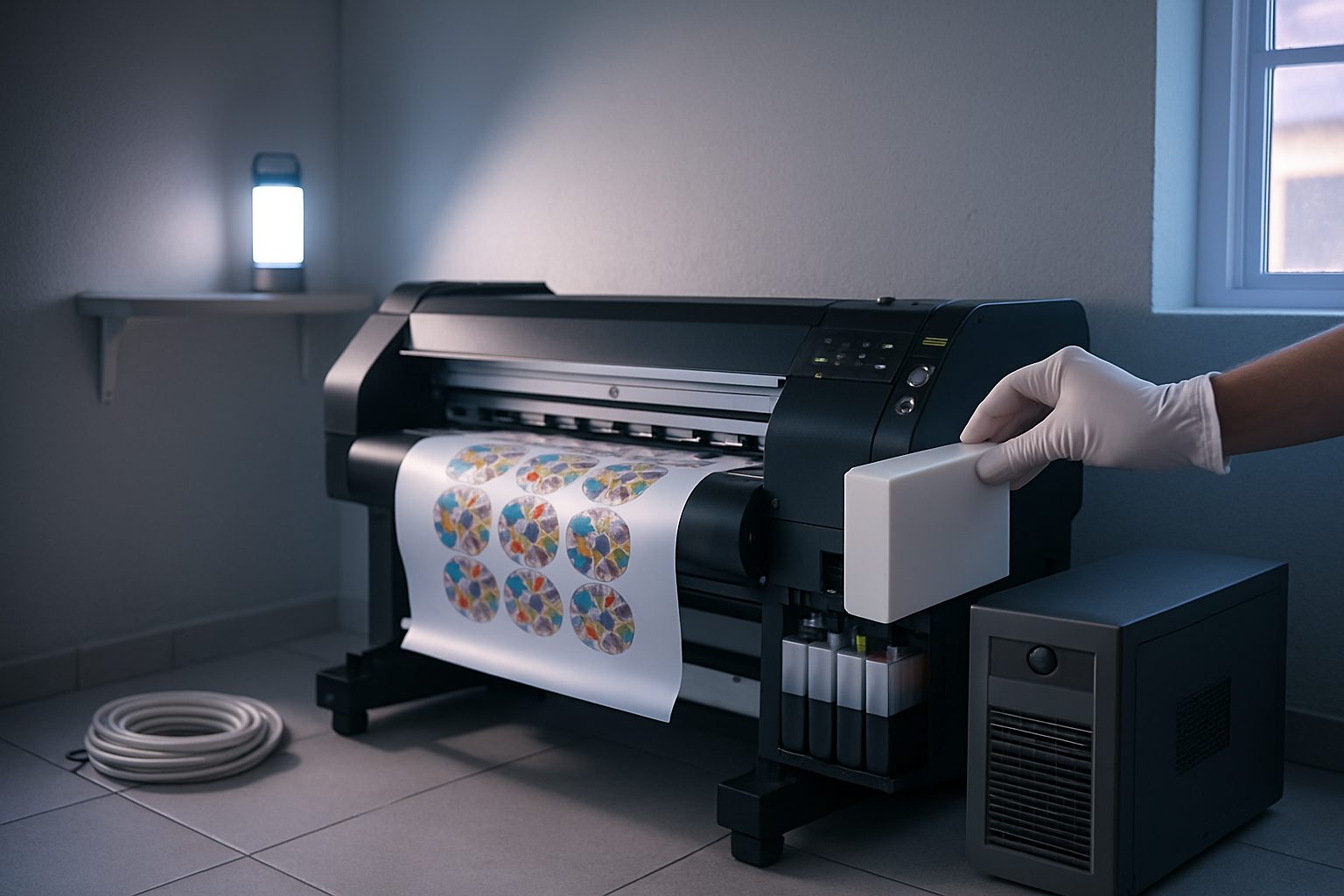
Every print room in Gauteng has the same story by now. You load a fresh roll, the RIP is happy, the first metre of film looks perfect, and then the lights go off at four o’clock. The printer stops mid-pass, the carriage sits over the film instead of the capping station, and the white ink in the lines just sits there. I’ve seen good heads ruined by one bad evening like that, so here is the routine we use at the Meadowdale lab and teach to customers on the East Rand.
Why white ink suffers first
DTF white is a heavy pigment ink. The titanium dioxide in it wants to settle the moment the circulation pump stops moving it. CMYK inks are far more forgiving. They can sit for a day or two and still fire cleanly after a short purge. White can’t. Two hours of standing still in a warm room is enough for a soft layer to form in the damper and the lines, and if the head was left uncapped the nozzles start to dry at the same time.
A cut that lands while the carriage is parked and capped is annoying. A cut that lands mid-print, with the head out in the open air, is the one that costs you money.
What actually needs backup power
Only the printer and the PC running the RIP need battery power, because they are the two things that must finish cleanly. The shaker and curing unit, and certainly the heat press, pull far too much power for a small unit, so let those stop and deal with them after.
- A line-interactive or online UPS on the printer and RIP PC only
- Pure sine wave output, cheap modified sine units can upset printer power supplies
- Enough runtime for the printer to finish the pass and park, about 10 to 15 minutes is plenty
- A surge protected plug for the RIP PC so the job file isn’t corrupted when power returns
- Heat press and curing oven on a separate circuit from the UPS
- A rechargeable lamp near the printer so you can see what you’re doing
If you already have a home inverter and battery setup running the office, check its wattage before adding the printer. A curing unit switching on during a slot will trip a small inverter in seconds, and then you have lost the printer as well.
The thirty minutes before a slot
Check the schedule every morning and put the slot times on the whiteboard next to the printer. Then, about half an hour before the cut, stop sending long jobs. A one metre gang sheet is fine. A twelve metre run of club crests is risky, because you will lose the end of the roll and probably the job too.
Finish the last print, powder and cure it, and let the printer park and cap itself properly. If your machine has a white circulation setting, leave it on the UPS so it keeps moving for as long as the battery allows. Then switch the printer off from its own power button, not at the wall. That way it runs the normal shutdown and caps the head itself.
Last thing, cover any open powder trays. With the aircon off the room warms up quickly and on the coast the humidity climbs, which is a whole seperate problem we have written about in the humidity recipe.
After load shedding white ink restart steps
Don’t rush straight into the next order. Give the grid a few minutes to settle, because the first minutes after a slot can bring dips and spikes. Then work through it in order.
- Gently rock the white cartridge or tank, never shake hard enough to foam it
- Power the printer on and let it finish its own startup routine
- Print a nozzle check on a short strip of film before anything else
- Run one normal clean if white has gaps, not three power cleans in a row
- Print a small test with a solid white block and check for banding
- Only then restart the queue, starting with short jobs
If the nozzle check still shows missing white after two cleans, stop and phone us. Repeated power cleans waste ink and push settled pigment deeper into the head, which makes things worse rather then better.
Planning the week around the schedule
The shops that cope best treat the schedule like a delivery window. Long white heavy runs, like dark tee orders and big underbase jobs, go into the longest stretch of power you have that day. Short runs, sample sheets and pressing of already printed transfers fill the gaps, since a heat press only needs the power back for a few minutes to be useful again.
Keep a simple log of each slot, whether the printer parked, and what the nozzle check looked like after. A month of that tells you if the UPS is coping. Our White Only Top-up is sized for exactly that kind of week. In a dry winter room, keep sealed bottles upright and shake them daily before a top-up.
If you want us to look at your setup, send a photo of the printer, the UPS label and a recent nozzle check. We’ll tell you honestly if it’s enough.

Ink chemist at DTF Ink. Ink chemist Louw keeps our CMYK and white DTF ink flowing for real South African print shops.

Talk to DTF Ink
Tell us about your printer, film, powder and press settings and our team will help you get repeatable transfers. Meadowdale lab in Germiston, plus seven studios.